

Field Maintenance of M83513: How to Quickly Replace Contacts?
Field Maintenance of M83513: How to Quickly Replace Contacts? Our
5 Critical Parameters You Must Specify When Selecting a Push-Pull Military Connector
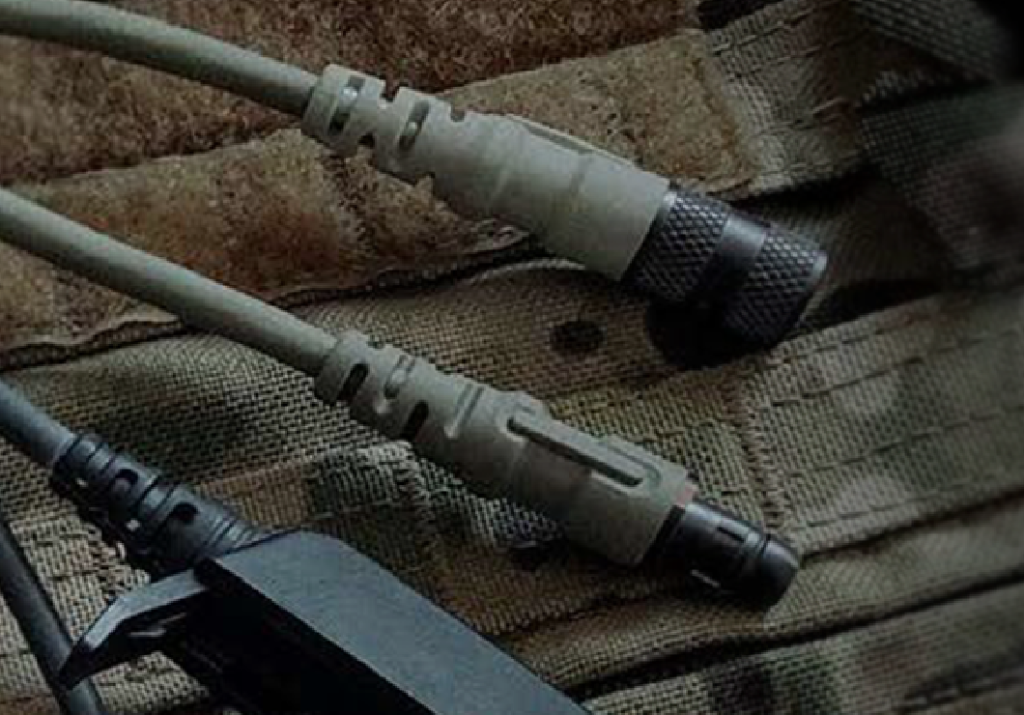
Push-pull connectors are taking an increasingly important role in military equipment — from soldier-worn systems to UAV avionics, from naval equipment to missile launchers.
Their “one-hand operation, blind-mate tolerance, and quick-disconnect” features are redefining battlefield interconnect efficiency. But precisely because of the diversity of push-pull connector technologies, a small mistake in selection could lead to unpleasant surprises during service: mating force either too tight or too loose, insufficient sealing rating causing water ingress, inadequate EMI shielding leading to signal crosstalk…
This article focuses on five core parameters to help you build a systematic selection scheme.
Parameter 1 – Locking Type
Locking type is the most fundamental differentiating feature of a push-pull connector — it determines both “how it locks when inserted” and “how to disconnect without damaging the cable.”
1.1 Ball Detent / Ball Bearing Locking
This is currently the most mature and widely used locking method in military push-pull connectors. When the plug is mated with the receptacle, balls inside the coupling sleeve are pressed by springs into the lock groove of the receptacle shell, creating a “positive locking” interface. Amphenol’s 2M Ram-Lock series is a typical example — its locking mechanism uses ball bearings to achieve consistent and reliable engagement between plug and receptacle.
The core advantage of ball bearing locking is its resistance to accidental unmating: the user must pull the operating sleeve of the plug to disconnect, rather than pulling the cable, effectively preventing disconnection due to misuse. Amphenol’s Ram-Lock push-pull connectors support up to 2,000 mating cycles and offer full environmental sealing and EMI protection.
Selection advice: If your application carries a risk of accidental cable pulling (e.g., battlefield soldier systems, vehicle wiring), ball bearing locking is the priority choice.
1.2 Detent / Latch Locking
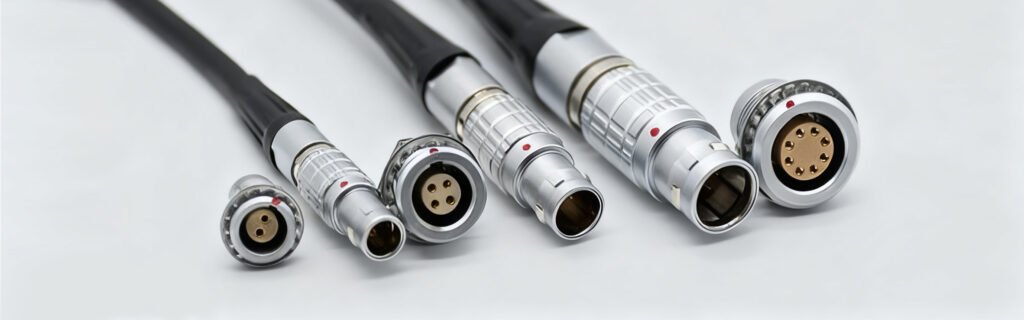
This is a locking scheme widely adopted by LEMO, ODU and other brands. Spring-loaded latches or elastic rings inside the plug snap into the lock groove of the receptacle shell when mated, providing both audible and tactile feedback — a distinct “click” upon full locking. LEMO’s push-pull connectors are well known for their unique push-pull self-latching system, enabling quick and secure connections and disconnections without any tools. ODU AMC series supports the interchangeability of both push-pull and Break-Away locking variants on the same receptacle, offering system engineers great flexibility.
Selection advice: If operating comfort and locking confirmation feedback are more important, and there is no significant risk of accidental pulling, detent locking is an ideal choice.
1.3 Polarization & Keying
Regardless of the locking type, polarization design is a critical specification that cannot be overlooked in military procurement. LEMO’s B series offers multiple keying options to avoid cross-mating of similar connectors. ODU AMC also supports optimized mechanical keying and color keying. Fully utilizing polarization and keying design significantly reduces the risk of equipment damage caused by incorrect mating in the field, especially in scenarios where multiple interfaces share a single panel.
1.4 Blind-Mate Tolerance & Auto-Correction
ITT VEAM’s push-pull connectors feature an ±0.5mm alignment tolerance — even if insertion is slightly off, the connector self-corrects, enabling very fast blind mating. This is crucial in blind-mating scenarios such as rack backplanes and avionics modules where visual alignment is difficult.
Parameter 2 – Mating / Unmating Force
Mating/unmating force is a critical parameter that directly affects user experience and battlefield operation efficiency. Too much force makes one-hand operation difficult for soldiers under high pressure; too little may cause accidental disconnection due to vibration.
2.1 Industry Range of Mating/Unmating Force
According to Amphenol’s SC39 series data, the insertion/extraction force range for standard push-pull connectors is 5 to 10 kilograms (approximately 49 to 98N), while the low-force version is less than 5 kilograms (below approximately 49N). Mating force designs vary significantly across suppliers and applications; ODU AMC series is designed for easy handling with low-force push-pull mating; TE Connectivity’s OCH micro circular connectors set a breakaway force of 13±3lbf (approximately 58±13N).
In comparison, designs with EMI shielding structures increase the mating force budget (see Chapter 4 for details), as shielding structures and grounding fingers require additional contact and frictional resistance. For example, Amphenol’s Ram-Lock series uses traditional D38999 EMI fingers for shell-to-shell conductivity — the trade-off between increased mating force and EMI shielding effectiveness must be evaluated during selection.
2.2 Warrior Grip and Force Balance
TE’s Warrior Grip series sets the unmating force at 13lbs (approximately 58N), precisely balancing the point at which the connector “disconnects only when intended”. Adding anti-slip texture to the shell surface provides extra assistance for quick operation in harsh environments.
Selection advice: For applications involving frequent mating/unmating such as ground C4ISR, low-force versions are recommended. For high-vibration, high-value aerospace equipment, a slightly higher mating force may be acceptable in exchange for anti-loosening reliability.
Parameter 3 – Sealing Rating
Military connectors may encounter everything from desert dust to deep-sea immersion. Sealing rating determines the connector’s survivability in harsh environments.
3.1 IP Rating Basics
IP50: dust-protected only, suitable for indoor or protected environments. LEMO B series is a typical example — its IP50 rating is designed for test and measurement, instrumentation and other indoor applications.
IP67: protection against temporary immersion (1 meter depth / 30 minutes). Widely used in military ground C4ISR systems, vehicle-mounted equipment and naval electronic devices.
IP68: protection against continuous immersion (specified depth / specified time). ODU AMC series supports IP68 (up to 20 meters), and LEMO Optima D series achieves IP68 (20 meters/2 hours) even in unmated condition. Souriau JBX series offers both IP40 and IP68 rating options for different indoor/outdoor requirements.
IP69K: protection against high-temperature, high-pressure water jets, suitable for applications requiring frequent washdowns, such as naval equipment and ground vehicles. Amphenol’s Ranger series and ODU-related products all support IP68 and IP69K. ITT Cannon’s Universal Endbell features shielding and sealing options that push the protection rating up to IP69K.
3.2 Trade-offs in Sealing Rating Selection
IP50 or below primarily used for instrument connectors and test/measurement equipment with high cleanliness requirements.
IP67 is a common rating for ground combat and vehicle-mounted C4ISR, sufficient for heavy rain and temporary immersion.
IP68/IP69K are essential for naval applications such as shipboard systems, deep-sea exploration and desalination systems. When choosing IP68, be sure to verify the tested depth and duration.
Note: Higher sealing ratings typically imply more complex shell structures, potentially higher mating forces and higher costs. There is no need to pursue IP69K for every project — choose the appropriate rating based on the actual application environment.
Parameter 4 – EMI/RFI Shielding
On the modern battlefield, electromagnetic interference is everywhere — from RF signals of communication equipment to high-power pulses from radar systems, to nuclear electromagnetic pulses. A connector’s shielding capability directly affects signal integrity.
4.1 Implementation of EMI Shielding
360° Omnidirectional Shielding: high-end push-pull connectors achieve omnidirectional shielding by placing grounding fingers or EMI springs between plug and receptacle. Amphenol’s 2M series uses traditional D38999 EMI fingers for shell-to-shell conductivity, ensuring consistent shielding continuity. LEMO Optima D series lists EMI/RFI shielding as one of its core design features, ensuring uninterrupted communication on the battlefield.
Shielding Effectiveness in dB: Souriau JBX series achieves a shielding effectiveness of 55dB at 100MHz, providing over 99.8% EMI suppression in the lower frequency range. Benchmark products offer even higher shielding effectiveness across a broader frequency range (>60dB / >40dB). In actual procurement, request measured curves across specific frequency bands from your supplier, rather than just nominal maximum values.
Shielding Contribution of Connector Shell Material: the metal shell itself is a natural shielding layer, and the contact resistance between shells should be sufficiently low (ITT Cannon specification states shell-to-shell conductivity <5mΩ at 500VDC/1A). When selecting non-metallic composite shells, confirm separately whether EMI shielding provisions (e.g., ground planes or conductive coatings) are effective.
4.2 Basis for Selecting Shielding Effectiveness
Communication equipment and video transmission systems typically require shielding effectiveness of 40dB or higher to suppress crosstalk between adjacent channels.
Radar front-ends, electronic warfare, and sensitive signal acquisition systems require stricter shielding of 60dB or higher.
In system-level design, the shielding effectiveness of the connector should be consistent with the overall EMC of the chassis — too high or too low can lead to design redundancy or failure.
Decision Summary Table
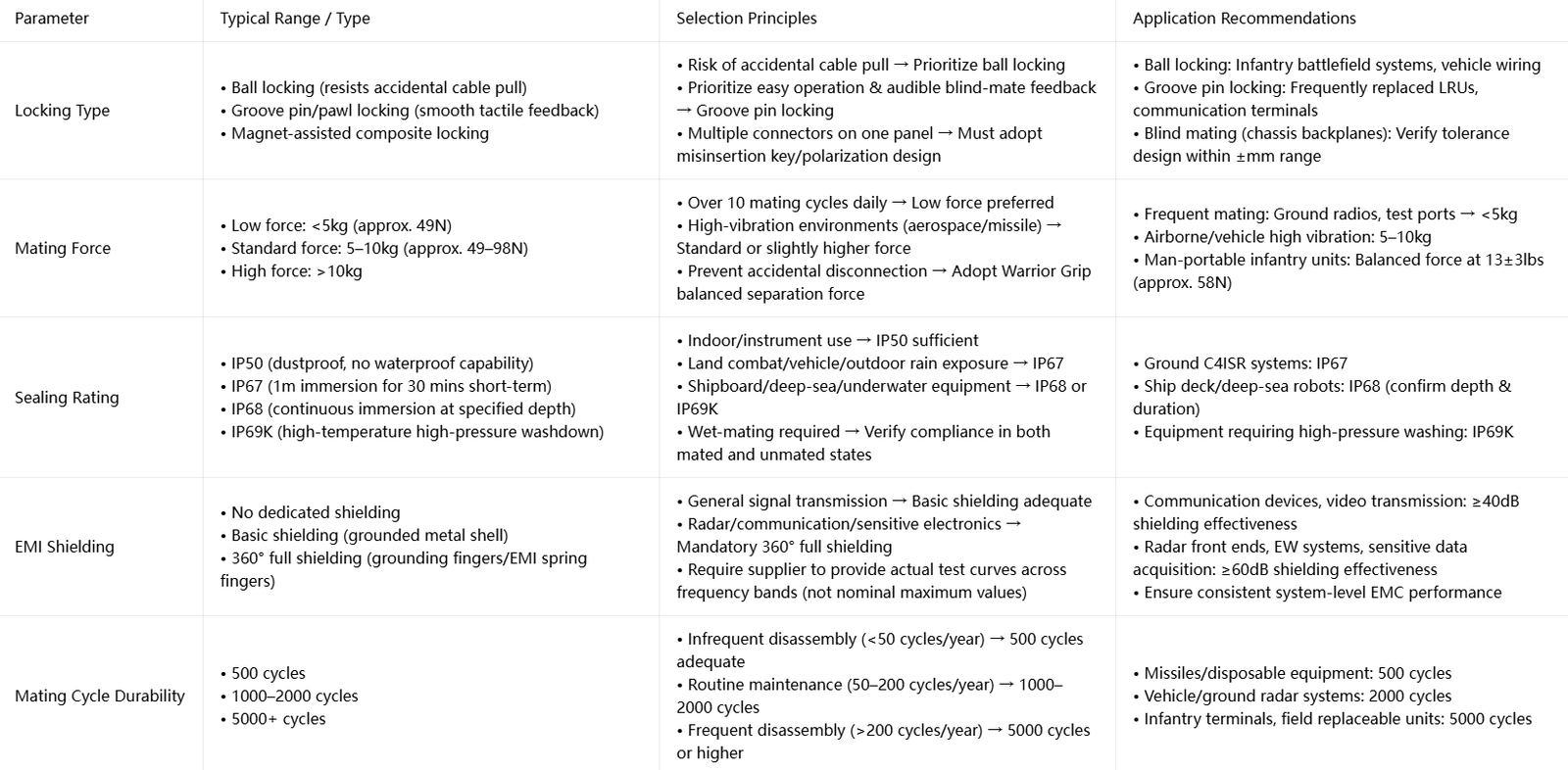
After reading these five parameters, you may have realized: the key to selection is not how high any single parameter can go, but how to combine them into a balanced solution for your specific project. And this step often requires experience and data.
We Run the Full Selection Process for Your 5 Parameters
Recent Posta
Field Maintenance of M83513: How to Quickly Replace Contacts? Our

38999 vs MIL-C-83513: Circular vs Micro-Rectangular Our Products Two Shapes,

Salt Spray Resistance of MIL-C-26482: A Complete Guide to Plating
Get Quote of Connectors