

Field Maintenance of M83513: How to Quickly Replace Contacts?
Field Maintenance of M83513: How to Quickly Replace Contacts? Our
Environmental Testing of M83513: Temperature, Vibration, Shock, and Salt Spray — The Complete Range
Why Do Connectors Need to “Take Exams”?
From design drawings to installation and service, a military connector must pass a series of extremely rigorous tests. These tests serve only one purpose: to confirm that it will not fail in a real battlefield environment.
The environmental testing of MIL-C-83513 (now MIL-DTL-83513) connectors is primarily conducted in accordance with MIL-STD-1344 (Test Methods for Electrical Connectors) and MIL-STD-202 (Test Methods for Electronic and Electrical Component Parts). The test items cover four major dimensions: temperature, vibration, shock, and salt spray.
This article breaks down the conditions, methods, and acceptance criteria of these four major test categories, helping you understand just how strong the “environmental adaptability” of M83513 really is.
Temperature Testing — Crossing from Extreme Cold to Scorching Heat
1.1 Operating Temperature Range
M83513 connectors have an operating temperature range of -55°C to +125°C. This range covers all natural environments, from Arctic winter to desert summer.
For extreme applications requiring higher temperatures, some manufacturers also offer high-temperature versions with operating temperatures up to +200°C, +230°C, or even +260°C.
1.2 Temperature Test Items
High Temperature Test:
Test condition: Place the connector in a +125°C environment for 1,000 hours
Test purpose: Verify that insulation materials do not soften, deform, or decompose under prolonged high temperature
Acceptance criteria: Contact resistance and insulation resistance must still meet specifications after the test
Thermal Cycling Test:
Test condition: Perform multiple temperature cycles between -55°C and +125°C
Test purpose: Verify that stress caused by differential thermal expansion between materials does not cause delamination or microcracks
Acceptance criteria: No delamination, no cracks, and normal electrical performance after the test
Thermal Shock Test:
Test condition: Switch from high temperature to low temperature (or vice versa) in an extremely short time
Test purpose: Simulate the severe temperature change when a missile rapidly ascends from a high-temperature ground environment to a low-temperature high-altitude environment
Acceptance criteria: No mechanical damage and normal electrical performance after the test
Vibration Testing — Signal Integrity Under Continuous Testing
2.1 Vibration Test Conditions
Vibration testing of M83513 connectors is conducted in accordance with MIL-STD-1344 Method 2005.
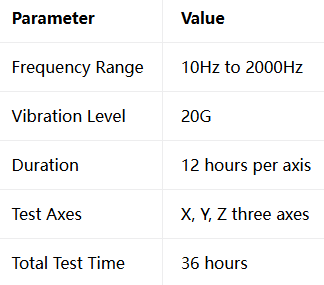
Test Purpose:
Simulate the overload at the instant of missile launch, the blast wave from artillery explosion, and the severe jolts during equipment transport
Verify that the connector does not suffer structural failure or signal interruption under instantaneous high overload
Acceptance Criteria:
During shock, signal interruption must not exceed 1 microsecond
After shock, no mechanical damage and no loose parts
After shock, contact resistance and insulation resistance must still meet specifications
3.2 Higher-Level Shock
Beyond the standard 50G shock, M83513 connectors also perform excellently under more stringent test conditions:
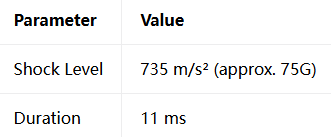
These figures show that the actual shock resistance of M83513 far exceeds the minimum standard requirements.
Salt Spray Testing — Survivability in Corrosive Environments
4.1 Salt Spray Test Conditions
Salt spray testing of M83513 connectors is conducted in accordance with MIL-STD-1344 Method 1001.
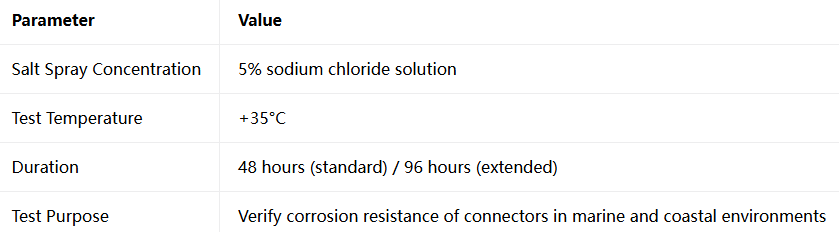
Test Purpose:
Simulate high-salt-spray environments such as shipboard decks, coastal radar stations, and offshore platforms
Verify that metal shells, platings, and contacts do not corrode and fail under salt spray attack
Acceptance Criteria:
After salt spray testing, no functional corrosion (corrosion that affects electrical performance)
Contact resistance and insulation resistance must still meet specifications
No severe defects such as blistering or peeling of the shell plating
4.2 Plating and Salt Spray Resistance
Salt spray resistance is closely related to plating selection. The main plating options for M83513 connectors and their salt spray resistance are as follows:
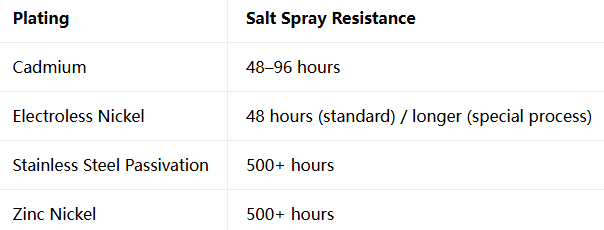
Selection Tip: For shipboard or coastal environments, stainless steel passivation or zinc nickel plating is recommended, as their salt spray resistance far exceeds that of standard cadmium or electroless nickel.
4.3 Contact Gold Plating
All M83513 twist pin contacts are gold-plated, typically with a thickness of 50 microinches (1.27μm) over a nickel underplate (30 microinches minimum).
The gold plating not only reduces contact resistance but also provides additional corrosion protection in salt spray environments — gold itself does not oxidize or corrode, making it the last line of defense protecting contacts from environmental attack.
The “Combination Punch” of Environmental Testing — Sequence and Combined Effects
Environmental tests are not conducted in isolation. M83513 connectors must undergo a “combination test” of multiple tests in a specified test sequence.
A typical test sequence is:
Thermal Cycling → Exposes thermal expansion defects in materials
Vibration → Exposes fretting wear of contacts and loosening of locking mechanisms
Shock → Exposes insufficient structural strength
Salt Spray → Exposes insufficient corrosion resistance of platings and materials
Electrical Performance Testing → Confirms that performance still meets specifications after all tests
The logic behind this sequence is: thermal cycling amplifies the effects of vibration and shock, and vibration and shock amplify the penetration of salt spray. Only connectors that pass all tests can be considered truly “environment-resistant.”
Interpreting Test Data — How to Determine If a Connector Is “Qualified”
When reviewing the environmental test report of an M83513 connector, it is recommended to focus on the following key indicators:
1. Signal Interruption Time:
During vibration and shock, signal interruption must not exceed 1 microsecond
This indicator directly reflects the connector’s signal integrity in dynamic environments
2. Contact Resistance:
Contact resistance must be ≤8mΩ before and after testing
If contact resistance increases beyond the limit after testing, it indicates that contacts have worn or corroded
3. Insulation Resistance:
Insulation resistance must be ≥5000MΩ before and after testing
If insulation resistance decreases beyond the limit after testing, it indicates that insulation materials have absorbed moisture or aged
4. Mechanical Integrity:
No cracks, no deformation, and no loose parts after testing
Locking mechanism functions normally
Testing Is the Only Proof of Reliability
Temperature, vibration, shock, and salt spray — these four major environmental test items form the complete validation system for the “environmental adaptability” of M83513 connectors. Each test answers the same question: In a real battlefield environment, can this connector work reliably?
From -55°C extreme cold to +125°C scorching heat, from 20G continuous vibration to 50G instantaneous shock, from 48 hours of salt spray attack to 1,000 hours of high-temperature exposure — M83513 proves through test data: it is not only “small,” but also “strong.”
MIL-C-83513 Connectors
Every environmental test described above — temperature, vibration, shock, and salt spray — our product line passes all of them, and all are available with RoHS-compliant plating options (Electroless Nickel / Black Zinc Nickel)
Submit your selection requirements | Receive pitfall-avoidance advice + compliance document templates within 24 hours
Recent Posta
Field Maintenance of M83513: How to Quickly Replace Contacts? Our

38999 vs MIL-C-83513: Circular vs Micro-Rectangular Our Products Two Shapes,

Salt Spray Resistance of MIL-C-26482: A Complete Guide to Plating
Get Quote of Connectors