

Field Maintenance of M83513: How to Quickly Replace Contacts?
Field Maintenance of M83513: How to Quickly Replace Contacts? Our
Metal Shell vs Plastic Shell: The Engineering Trade-Off Between Two Shell Materials for MIL-C-83513
The Shell, a Connector’s First Line of Defense
MIL-C-83513 (now MIL-DTL-83513) is one of the most widely used standards in the military micro-rectangular connector field. With its 1.27mm contact pitch, twist-pin seven-point contact, and miniaturized rectangular shell, it has become the preferred choice for mission-critical applications such as aerospace, missile systems, and radar.
When procuring an M83513 connector, the shell material is the first decision you need to make — metal shell or plastic shell? This choice directly affects the connector’s EMI shielding capability, weight, cost, environmental resistance, and application range. This article provides a comprehensive engineering breakdown of the advantages, disadvantages, and applicable scenarios of both shell materials.
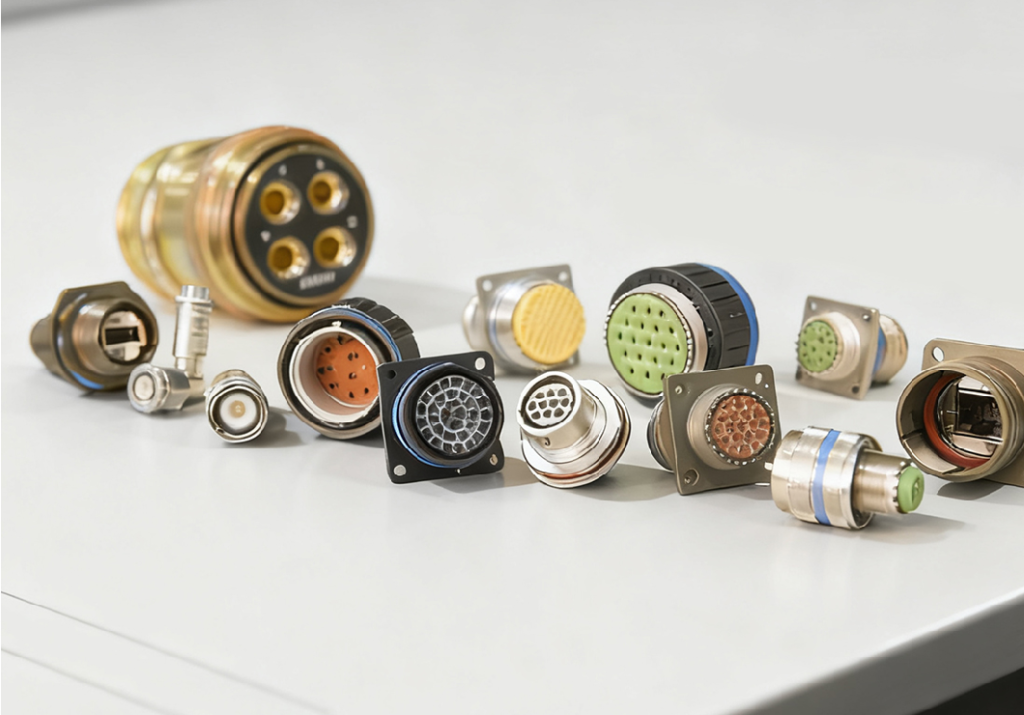
Metal Shell — The “Double Champion” of Strength and Shielding
1.1 Material and Specifications
MIL-DTL-83513 metal shell connectors typically feature shells made of Aluminum Alloy 6061, in accordance with SAE-AMS-QQ-A-250/11.
This aluminum alloy offers a good balance of mechanical strength and moderate weight, making it the classic choice for military connector shells. Additionally, some metal shells are available in Stainless Steel (300 series) for applications requiring higher corrosion resistance and strength.
1.2 Core Advantages
Excellent EMI/RFI Shielding Effectiveness
The most significant advantage of metal shells is their inherent electromagnetic shielding. The durable aluminum housing effectively blocks external electromagnetic interference, protecting sensitive signals.This characteristic is critical in high-density signal transmission and sensitive electronic equipment.
High Mechanical Strength and Impact Resistance
Aluminum alloy shells can withstand higher mechanical stress and impact loads, providing better protection under severe vibration and accidental collisions.
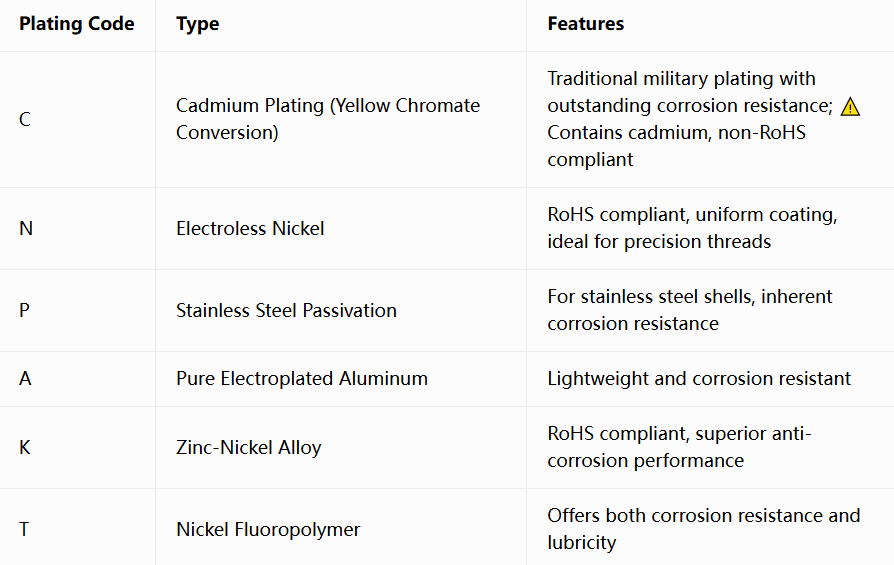
Multiple Plating Options for Different Environments
Metal shells support a wide range of surface finishes, allowing flexible selection based on the application environment:
1.3 Typical Application Scenarios
Aerospace and satellite systems (EMI shielding + high reliability required)
Missile guidance and radar systems (high vibration + signal integrity)
Military avionics (harsh environments + long service life)
Shipboard and ground C4ISR systems (high-EMI environments)
Plastic Shell — The “Value Champion” of Lightweight and Economy
MIL-DTL-83513 plastic shell connectors typically feature shells made of Liquid Crystal Polymer (LCP, 30% glass-filled) or Polyphenylene Sulfide (PPS, 40% glass-filled) , in accordance with MIL-M-24519.
These high-performance engineering plastics offer excellent heat resistance and dimensional stability, capable of withstanding the high temperatures generated during soldering.
All-plastic shell connectors are lighter and smaller than metal shell versions.In weight-sensitive applications such as UAVs, soldier systems, and space payloads, the lightweight advantage of plastic shells is particularly significant.
Plastic shells use injection molding, offering high production efficiency and low material costs, making them suitable for high-volume production. Compared to machined aluminum alloy shells, plastic shells offer significantly lower manufacturing costs.
Plastic is inherently an excellent electrical insulator, requiring no additional insulation treatment. In scenarios where EMI shielding is not required, plastic shells can provide adequate electrical isolation.
Plastic shells do not rust or corrode and require no surface plating for protection. In corrosive environments such as high humidity and salt spray, plastic shells have a natural advantage.
Typical Application Scenarios
UAVs and unmanned systems (weight-sensitive, lower EMI requirements)
Soldier-worn equipment (lightweight priority)
Ground communications and industrial equipment (cost-sensitive, non-EMI environments)
Commercial aviation and test/measurement equipment (moderate environmental requirements)
Metal Shell vs Plastic Shell — Comprehensive Comparison Overview
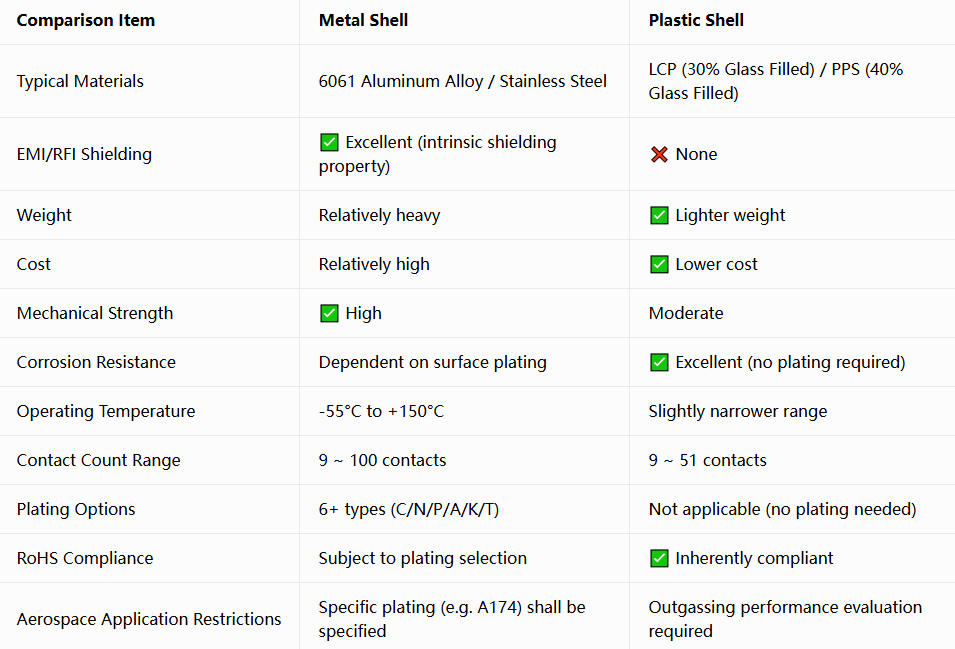
Intermateability: Metal-shell and plastic-shell M83513 connectors with the same contact count and arrangement are intermateable, providing flexible mixed-use options for system design.
Four Questions to Help You Decide
Q1: Is the equipment in a high-EMI environment?
Yes (radar systems, communication equipment, avionics) → Prioritize metal shell
No (ground communications, industrial control) → Move to next question
Q2: Is weight a critical constraint?
Yes (UAVs, soldier systems, space payloads) → Prioritize plastic shell
No → Move to next question
Q3: Is a 100-contact high-density configuration required?
Yes → Metal shell only (plastic shell does not support 100 contacts)
No → Move to next question
Q4: Budget priority or performance priority?
Budget-constrained → Plastic shell (lower cost)
Performance-first / long-term reliability-first → Metal shell
There Is No “Best,” Only “Most Suitable”
Metal shells and plastic shells each have irreplaceable value in MIL-C-83513 connectors. Metal shells win with EMI shielding, high strength, and a wide range of plating options; plastic shells excel in lightweighting, low cost, and plating-free corrosion resistance.
The choice depends on your application’s priorities in terms of shielding, weight, cost, contact count, and environment. Both are high-reliability products conforming to the MIL-DTL-83513 standard — the difference is not which is better, but which is more suitable for your project.
Choose Our Connectors

Submit your project requirements (shell material / contact count / environmental requirements) | Receive selection advice + compliance document templates within 24 hours
Recent Posta
Field Maintenance of M83513: How to Quickly Replace Contacts? Our

38999 vs MIL-C-83513: Circular vs Micro-Rectangular Our Products Two Shapes,

Salt Spray Resistance of MIL-C-26482: A Complete Guide to Plating
Get Quote of Connectors